
Why we measure before we build
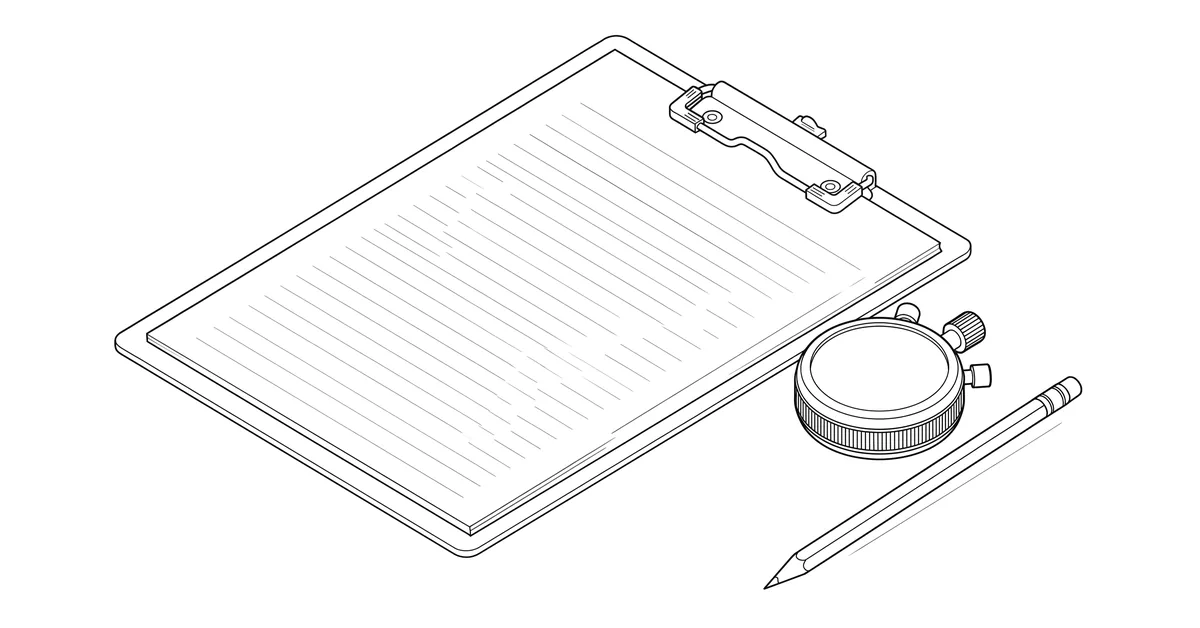
Most conversations about AI in a small business start in the wrong place. They start with the tool: which one to buy, what it can do, what a competitor is using. I think the better place to start is much less exciting. It's a stopwatch.
So before we build anything for a client, we spend a week measuring. Your team logs how long 3 to 5 of their everyday jobs really take: a quote, a tender response, the monthly report, chasing an overdue invoice. Each entry takes about two minutes. At the end of the week there's a baseline, and everything we build afterwards is judged against it.
Why not just start building?
Because almost everyone's sense of where their time goes is off, and I include myself in that. When people guess, they remember the jobs that annoy them, not the jobs that take the most hours. The job that feels painful is often a short irritation. The job that quietly eats a day a week is the one nobody mentions, because it has always been done that way.
Skip the measuring and you tend to automate the annoying job instead of the expensive one. It feels like progress, but the week doesn't change.
Think of it like a plant upgrade
I spent the first decade of my career in hands-on process engineering, and this habit comes straight from there. You would never modify a plant without first recording how it runs today: the flows, the temperatures, the downtime. Otherwise, once the change is made, there's no way to tell whether it helped, made things worse or did nothing at all.
A business process is no different. The baseline is what makes the result believable.
What the week gives you
- The right first job. The roadmap ranks each job by the hours a change would save, so the first thing we build is the one that pays back fastest.
- A price you can judge. Once you know how many hours a job takes your team each week, you can decide for yourself whether a fixed-price build is worth it, before you spend anything.
- A result you don't have to take on trust. Thirty days after a system goes live, the same people log the same jobs again. The difference is the result, whatever it says.
That last point matters to me. If a build doesn't save what we said it would, the second measurement will show it, and it goes on our results log anyway. I'd rather publish an honest miss than an impressive guess.
What it asks of you
Not much. About two minutes a day from each person logging, for one week, and an hour of your time on a call to walk us through the jobs. It's also why the AI Opportunity Audit comes with a guarantee: if the week doesn't turn up at least 5 hours a week of work that can be saved, you don't pay for it.
Try it yourself first
You don't need us to start. Pick the one job your team complains about most and the one they never mention, and time both for a week. I'd be surprised if the answer is quite what you expected.
If you'd like a hand working out what to do with the numbers, book a free 30-minute call and we'll go through them together. And if you do try it, I'd love to hear what you find: enquire@sparemindai.com.